Wednesday, 25 January 2017

How to keep your dog happy in the winter months . . .

Cold weather and shorter daylight hours can be a tricky time to keep your dogs happy, healthy and warm! Here are my top tips for having fun with your dog in the winter . . .

1. If your off lead walkies are restricted as it's dark by the time you get home, play some fun enriching games in the house. Use your dogs' dinner to play scentwork games where they find piles of kibble or their bowl of food that you've placed around the house.

2. Get reflective bands or a light for your dog when out in the dark so that they are easy to spot.

3. Wipe paws when you get home as the salt and grit used on roads and pavement can be highly toxic if ingested.

4. Make feeding games with your recycling that your dog can destroy to get to the food inside. Plastic milk bottles, drink cartons and cardboard boxes are a favourite in my house!

5. Do some training indoors to keep your dogs' brain busy. A good rainy day activity is to train your dog to settle on a mat as when spring arrives you can enjoy a picnic or pub visit with your dog relaxed on a mat beside you. 

If you're looking for a bigger challenge, you could join a local training class or have a 1:1 with me to start some new fun tricks or scentwork. 

Friday, 25 November 2016

5 Tips to survive the festive period with your dog

Christmas can involve a change in routine with family visiting, new smells and temptations from all of the goodies and lots of toys in the form of decorations. Here are some simple tips to ensure that your holidays go by without a hitch and your dog is safe, happy and relaxed.

1. Festive food
Christmas treats contain a range of ingredients that are toxic, poisonous or a choke hazard to dogs. Keep your dog away from chocolate, alcohol, dried fruit (mince pies) and cooked bones. If you do find that your dog has eaten something they shouldn't have, try to establish how much they have eaten and call your vet immediately.

2. Tinsel town
Christmas decorations can make wonderful toys! If your dog hasn't had much experience with a tree/lights/tinsel then supervise them at all times when they are in the same room. If you usually leave your dog in a particular room, perhaps don't decorate that room or just have decorations that are out of reach.

3. Get some rest
A busy household and lots of visitors can result in an overexcited and overtired dog. Make sure that your dog has a safe place to rest and relax where they can be away from guests if they want some peace.

4. Chill out
If your dog is used to having free access to you and the entire house and you want the option to shut them away from the party, now is the time to start practising so that your dog is relaxed and happy in another room. You can use a crate or baby gate as this is sometimes a better option than a solid door blocking visual access. Start to feed your dog their meals in there, play calm scentwork games in there and spend time with them in there for short periods over the next few weeks to create positive associations.

5. Train your guests
Humans are often more difficult to train than dogs! Even if your dog loves people, it is easy for them to become overwhelmed by the attention from visitors. Have some 'house rules' for your visitors - no feeding dangerous snacks (see above), no approaching the dog if they are resting and no disturbing the dog if they are in their 'safe place'. Keep an eye on your dog for signs that they may be uncomfortable (http://www.thebluedog.org/en/dog-behaviour/behaviour-problems/why-does-my-dog/ladder-of-aggression) and remove them from the situation before things escalate.


Happy holidays from all of us at Natdogs! 


Friday, 16 September 2016

5 'E'asy steps to a happy relationship with your dog

5 'E'asy steps to a happy relationship with your dog

Experience
Providing your dog with a range of experiences from an early age and matching them with positive associations will inspire confidence in social situations. Whilst genetics has an influence on how your dog feels about and deals with the world, early and continued experiences at a distance, duration and frequency that your dog can cope with will develop important life skills. 

Engage
Being mentally and emotionally present for your dog will ensure that you can read and react to their behaviour and redirect it to something more appropriate if necessary. Most dogs find eye contact, touch and verbal praise from their owner highly rewarding so pay attention to what your dog is doing and let them know that you're with them.


Empathise
Dogs are capable of feeling a wide range of emotions; fear, happiness, frustration, excitement, anxiety to name but a few. Much like us, the mood and behaviour of our dogs will depend on a range of factors and they may find some social situations difficult to cope with. Being mindful of this and ensuring that they have a safe place to rest and aren't overwhelmed by their environment will build trust and reduce the need for fearful or aggressive reactions.

Enrich
Boredom is often at the root of many behavioural problems. By providing activities that cater for our dogs' needs, we can minimise the likelihood that our dogs will find alternative, undesirable outlets for their highly motivated natural behaviours. Giving appropriate opportunities to dig, sniff, run, chase, scratch, chew and bite will keep your dog satisfied and happy. 

Enjoy
Research shows that living with or being in the company of a canine companion can be extremely beneficial for our physical and emotional wellbeing. Make quality time for you and your dog to enjoy an activity together everyday whether it be walking, playing or simply sitting together and watching the world go by. 

Sunday, 21 August 2016

No bad dogs, only bad owners . . . right?!

I work with all of my dogs to ensure that they can be the best version of themselves that they can be. However, I'm also realistic about how much I can actually influence and change in each of my dogs. Yes I can build confidence and resilience in social situations by setting up desensitisation and counter conditioning exercises and using effective management when out in public, but I cannot change some fundamental characteristics. Mouse will always be small, Gru will always be slight and fragile and Jack will most likely always have sensitivities about his back end (due to his dodgy hips).

For the reasons listed above, there are some dogs that I will actively avoid with each of my dogs in order to keep them safe, maintain trust in my ability to manage situations and to avoid them practising behaviours that I find undesirable. By knowing my dogs' personalities, capabilities and drive I can
observe, assess and interpret the behaviour of another dog and establish whether that dog will be a good match for my dog in a social situation. This is a skill that I have developed over decades as a behaviourist, but any dog owner should endeavour to learn enough about canine communication to do a mini-assessment of a dog you meet on a walk and decide whether that is a suitable play mate for your pooch. If your 5 second assessment throws up any concerns, you can then manage the situation by making your excuses and leaving. Kendal Shepherd's 'Ladder of Aggression' is an excellent place to start with observing behaviours and assessing emotions http://www.thebluedog.org/en/dog-behaviour/behaviour-problems/why-does-my-dog/ladder-of-aggression.

Knowing what your dog enjoys and is worried by can also help you to decide whether the approaching dog is an appropriate play mate. For example, I know that Gru does not enjoy being body barged in play. He's fast enough to get away but I don't want to put him in that situation and risk him not recalling back to me in an attempt to avoid the other dog. Mouse weighs 4kg. She is not going to enjoy being pounced on by a larger dog (most dogs are bigger than her!) or chased by a dog with a predatory drive that might see her as a prey item. Jack is a bit of a wonky old man and isn't up for engaging in rough play so unless a dog is going to keep themselves to themselves, we stay on lead and bimble on our way.

There is no shame in knowing your dog's limitations and avoiding situations that may put them in danger or make them uncomfortable. In fact, I implore all dog owners to do more of it. In my behaviour work I see more and more dogs that have been completely overwhelmed by social encounters with 'rude' dogs that bound over and are not able to read the situation and react appropriately. To me, a well socialised dog is one that can walk with, play with and coexist with other dogs and people by conversing, establishing boundaries and building a relationship based on trust. This requires effective management from the human half of the partnership in every social situation and a knowledge of what your dog can and can't cope with.

Thursday, 24 September 2015

What a pile of sh**!

I talk about poo a lot. Whether it's about the regularity or consistency of movements, toilet training or encouraging people to be responsible and pick up after their dog, poo is certainly something that comes up in the majority of my consults. By far the most common questions from puppy owners are about poo...

"Why does he eat his own poo?"
"Why does he eat cat poo"
"How can I stop him eating his own poo"
"He follows my other dog and eats his poo"
"How can I stop him licking me after he's eaten poo"

....you get the idea.

My advice was always simple and followed the same lines as with any unwanted behaviour. The key is to prevent your dog from practicing the behaviour and reward them lavishly for an alternative behaviour that is incompatible with the original one. However, having lived through this issue first hand, I wanted to share my experiences of working through coprophagia (useful new word for the pub quiz!) and turning it from a 'problem' into a useful activity.

My little pup Gru is now a year old and has a fantastic skill. He can tell me exactly where there is some dog poo that hasn't been picked up. Not only does this come in handy in the garden (there's always one you miss!), it's even more useful at our 3 acre field. Pin pointing poo hasn't always been a skill for Mr Gru as his preferred option used to be to gobble it down as soon as he found it.

So how exactly did I transform Gru from a poo-eater to a poo-hunter?

Step 1 - When I first noticed Gru tucking into a 'snack' aged 12 weeks my instinct was to shout "Leave, no, ah ah" or a similar command that meant "don't eat that" but would likely have no effect on Gru's behaviour what so ever. I also felt the need to walk towards him and move him away or try to pick up the poo before he could eat it all. However, I had my behaviourist hat on that day and so instead of doing any of the above I did something very simple. I stood still and said nothing.

Step 2 - Now I knew my little pup had a taste for no. 2's, I stepped up the supervision in the garden and made sure the garden was poo-free. I kept Gru on a lead or long line for toilet trips initially and was armed with tasty treats. As soon as he went to the toilet I would celebrate . . "Yes! Good boy!" which would inevitably get his attention and he would trot over to me to see what all the fuss was about. I would keep celebrating and give him a few tasty treats as we walked back into the house. Once he was inside, I would return outside on my own to pick up the poo.

Step 3 - After a few weeks Gru was coming back to me on the patio after going to the toilet. He was expectant of the celebration and reward so I relaxed a bit and didn't worry about the lead or line when out on toilet trips. This extra 'freedom' gave Gru the opportunity to sniff poo at which point I would celebrate and he'd come to me for a reward.

Step 4 - A year down the line he's now a very reliable poo hunter. I can even tell when he's on the scent as he gets very excited and his tail wags in a particular way. Now when he finds his prize, he'll stand over it, give it a good sniff and then look back to me to make sure I've noticed. A "Yes, good boy" brings him running over for his reward which I'm only assuming tastes better than poo!

So there you have it, from poo eater to poo hunter in a matter of months with very little effort. I knew Gru was on a good diet (which is often the reason given as to why dogs are eating poo) and didn't want to use an aversive to make his poo taste nasty (again commonly given advice) so I decided to go with it and turn it into a useful, fun activity. Remember, how you react to your dogs' behaviour will have a dramatic effect on whether that behaviour continues or diminishes so before you take a step towards your dog and say "ahah" just think about whether it's a major issue at all. Sometimes doing or saying nothing is the best way to react.

Have fun!


Friday, 10 July 2015

What to expect when you're expecting (a puppy)

During my time running puppy classes, 1:1 puppy training and off lead socialisation sessions I have seen hundreds of puppies of different breeds. Regardless of the breed of dog or circumstances of the owner, there are some 'FAQs' that always come up. 

Surprisingly, the most common questions I get asked are problematic to the owners, but completely normal puppy behaviour. I thought this blog may enlighten new puppy owners (or puppy owners to-be) about the reality of puppy ownership and set a few things straight so that you can get through the first few months of your puppy's life without constantly worrying whether your dog is 'normal'.

So here we go, the uncensored top ten truths of puppy ownership ......

1. You will get bitten - and it hurts!

Be prepared to wear long sleeves and trousers to either protect yourself from a ninja biting puppy or
to cover up the cuts created by the needle sharp teeth in your precious puppy's gob. Puppies use their mouths to explore new things, soothe their teething pains and elicit play. Therefore it is important that you offer them plenty of opportunities to bite and chew appropriate items - toys, kongs, cardboard boxes etc. and don't encourage them to play roughly with your hands or feet. Always have a toy to hand when you are interacting with your puppy to redirect them if they come towards you with the intent to nibble.

2. Your house and other items will be chewed or eaten

As mentioned above, puppies need to bite and chew. They also need entertaining with appropriate items otherwise your favourite Jimmy Choos could become the next target. It is your job to puppy proof your house and garden and keep precious or dangerous items out of reach of your puppy. As far as your puppy is concerned, if it finds it, it's his so be meticulously tidy, cordon off areas and shut doors or keep your puppy behind a gate or in a crate when you're not there to supervise.

3. You will get jumped up at

Your face and eyes are the most expressive part of your body but just so happen to be the furthest away from the floor. In an attempt to elicit some social contact, your pup will jump up to get closer to your face and to grab at hands. Running and being excitable can also encourage jumping up and biting which is a perfectly normal play behaviour in puppies. If your puppy is jumping up at you, celebrate the fact that they trust you and want to play and work on teaching them a more appropriate greeting, or putting jumping up on cue.

4. Raising a puppy is a full time job


Everyone dreams of relaxing on the sofa with a puppy on their lap snoozing but that is seldom the reality! A busy puppy is a good sign as it shows they are healthy, active and confident. If you have to work, make arrangements for someone to check in on your puppy regularly and put time aside everyday to play with and train your puppy (play and training are not mutually exclusive). Put as much, if not more, effort into training 'off switch' behaviours (settle with a chew, handling, mat work, crate training) as you do 'on switch' (playing with a toy, recall). Being able to relax is a vital life skill
and should be taught from day one.

5. Your sleep will be disturbed

Toilet training can be tricky but if you are consistent and get your dog in the right place at the right time, accidents in the home will be minimal. Your puppy will only have a small bladder and little bladder control to begin with so night time pees are a high probability. Trundling down in your nightie to let your dog out for a pee at 2am may not be your idea of fun but if you don't want to wake up to puddles in the morning, it just has to be done.

6. Your garden may be dug up

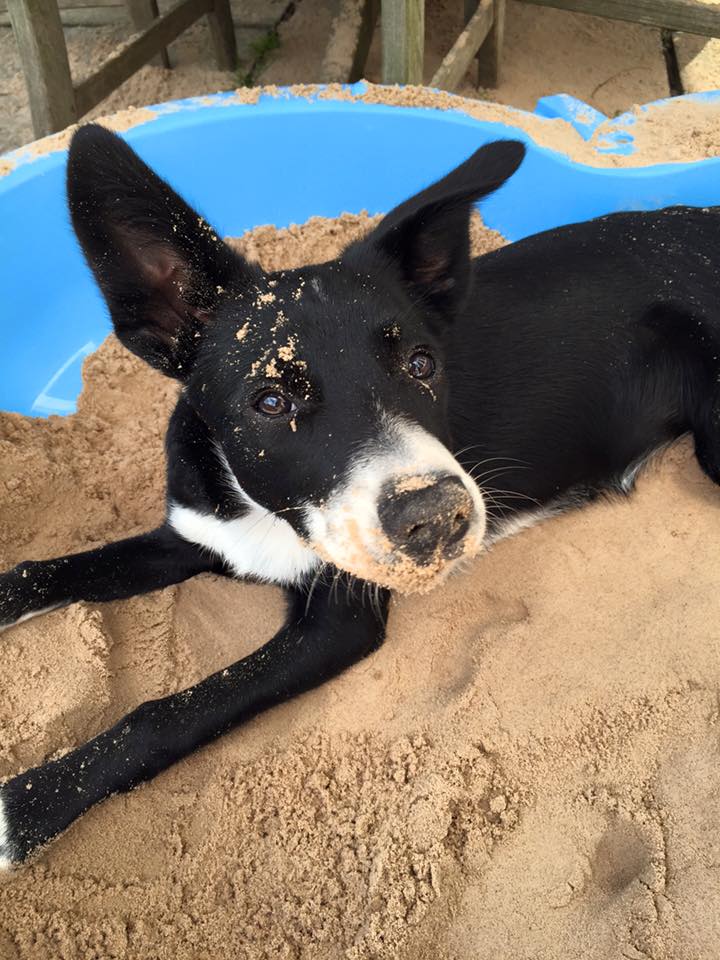
Digging is a very normal and natural dog behaviour. It is a fun activity for dogs and some dogs are highly motivated to dig. Providing an appropriate area to dig such as a sandpit filled with sand, shingle or soil can be a huge reward and enrichment for a young pup. You can bury toys and food to make it a fun game.

 7. You will be 'trained' to perfection if you're not careful

Humans are creatures of habit and fall into routines without even being aware that we are doing it. This means that you will be unwittingly giving your puppy cues and signals regarding what is about to happen and you can easily encourage patterns of behaviour that are undesirable. An example of this is when your puppy 'steals' an item (which you shouldn't have left out - see point 2!) and then goads you into a chase game. Your dog then thinks "Ah ha, I can get her attention by taking the tea towel in when she's watching tv!". Providing plenty of brain games, and training your puppy to relax with a chew will prevent your dog from having to find their own entertainment.


8. You will be disgusted by some of their favourite activities

Yes, eating poo is a natural behaviour! There's even a scientific term for it - coprophagia. Most pups go through a phase of being interested in eating their own poo. By managing toilet visits, calling them away for a piece of food and picking up after them immediately most pups lose interest in recycling their waste. Cat poo however is another matter and a canine delicacy!

As well as eating poo, they'll also roll in it. There are various theories behind why they do this including masking their own scent or taking the scent back to the den to communicate with others but it could just be that it smells great to them and rolling in it is enjoyable. Again, management is the key but if you miss the moment, just laugh and enjoy and think of the grooming training you'll be able to practice later on!

9. Your social life will change

Whilst your puppy is settling in, it's important that they aren't left alone for too long and you teach them to relax when they are along gradually. This may mean no nights out in the short term but it's not all doom and gloom as dogs are an excellent social facilitator and you'll get to know all of the local dogs and their owners before you know it so prepare for a new group of friends!

10. Everyone will try to give you advice

The dog training industry is unregulated and there is a huge difference in the quality of puppy socialisation and training classes available. Don't just got to the closest class to you. Call around, ask questions and go to watch some classes to find the best fit for you and your dog. Once you find an ethical, qualified, experienced behaviourist or trainer that you trust listen to them and do what they advise as they are the expert! Find out more here if you're not sure how to find a professional you trust.


All of these 'puppy truths' can be worked through with a bit of planning, prevention, patience and positive reinforcement of alternative behaviours. Being a family pet is a tricky job as most humans are consistently inconsistent! This means it is hard for the puppy to figure out what is expected of it and sometimes it can end up in the doghouse for simply doing what comes naturally. So please, relax and enjoy your puppy knowing that the 'crazy puppy' whirlwind does end after a few months but that the relationship you have with your dog will last their lifetime so nurture it as best you can. If you don't think you can handle what's written in this blog, then perhaps you should reconsider your choice of companion animal.


Tuesday, 13 May 2014

What is the true cost of 'free advice'?

This blog may come across as negative and I apologise if it does, I don't intend it to be. I just wanted to raise an issue that a lot of us have in the business; being asked for free advice because people "can't afford it". Of course, times are hard and every penny counts, but if you are having training or behaviour issues with your dog, it is your duty to do all you can to resolve it with the guidance of a reputable professional.

Most trainers and behaviourists are small business owners that care deeply about their clients and prospective clients and the welfare of their dogs. A lot of us do work at discounted rates for local charities and the price you pay for our time doesn't necessarily reflect the amount of time we spend on each client. There is often report writing, phone calls and emails before/after the session and liaison with other paraprofessionals and vets. We have mortgages and bills to pay and families of our own to take care of. We are not a public service. Yet many of us are called/emailed by people experiencing
issues with their dogs, looking for free advice as they couldn't possibly afford to pay for a professional.

A rough estimate of the cost of my dog training & behaviour career to date:

Undergraduate degree/accomodation/living costs = £9000
1:1 training with well-respected professionals for me and my dog over the past 6 years = £9000 
Regular CPD webinars over the past 4 year = £300
Seminars and workshops over the past 6 years = £2200
Business insurance for the past 5 years = £1000
Business vehicle costs for the past 2 years = £2500
Books = £1500
Dog training venues/equipment for the past 2 years = £2000
Membership fees for the past 4 years = £900
Postgraduate degree/accommodation/living costs = £6000

TOTAL = £34,400

Of course, I wouldn't have it any other way and I'm certainly not suggesting that anyone owes me anything for my choice to educate myself and follow a dog training and behaviour career. However, next time someone quibbles paying £35 for a 1:1 training session with me because they couldn't possibly afford it, I'm going to remember the £35k that I've spent obtaining the knowledge and skills required to get to where I am and simply send them details of my rates. If they don't like it, they can go and educate themselves in order to help their dog, which judging from the above will be a lot more expensive!


Monday, 12 May 2014

Why rescue dogs are just great

First outing after adopting him
Recent events (health stuff and turning 30!) have turned me into even more of a sentimental sap than I was before so I thought I would put ink to screen and make a note of just how fabulous my best mate Jack really is. It can be really tough living with a 'reactive dog' and I wanted this blog to act as a pat on the back to everyone out there who is working through some behaviour issues with their canine family member. If you are just embarking on a journey with a new rescue dog, I hope that the pictures that follow show that with some forward thinking, environmental management and lots of fun, reward-based training, you can get out there and have a fabulous time with your pooch!

Jack + toy = happy
In 2008, me and my husband went to our local Blue Cross branch to 'have a look'. Haha we all know that isn't possible. We met a very handsome and very attentive collie cross called Jack who had been rehomed as a puppy, but returned after 8 months. He was now 16 months old and not doing too well in the kennel environment. We played with him, took him for a walk and after a tense week of home visits/training sessions, picked him up to bring him home. Little did we know the adventure we would be going on with him :)

Nice dog, shame about the handler!
I have hundreds of photos of the fun that we've had together over the years. Some of the highlights include:
  • Learning all about agility and winning a few rosettes and trophies despite Jack being light years ahead of my poor handling skills! 
Camping trips
    Guest of honour at our wedding
  • Going on our first camping trip in a tent resulting in a very disturbed night of sleep and a soggy sleeping bag (thanks Jack!). We then bought a camper van to make life a lot easier! Since then, we've traveled all around the UK with the doglet - Somerset, Essex, Scotland, Wales, Newcastle, Wiltshire. He loves it in the van and we've seen some of the most beautiful places together. 
  •  Being able to join in the celebrations when we got married and Jack coming along on our honeymoon in Wales. 
  • Forcing/helping me to up my game when it came to my training and timing, particularly my clicker skills.  He's a smart cookie so trying to keep one step ahead has helped me to preempt what might happen in training sessions and work hard to minimise frustration etc. 
  • The time that he almost killed us all but then saved our lives by turning the gas hob on in the middle of the night (probably trying to reach a bit of food) and then barking at us to wake up and turn it off.
  • The milestone moments such as the first time we were able to have 2 pints in the pub garden
    Cheers!
    without Jack getting bored (that took months of really hard 'training'  in the pub!), when he was able to glance back at me for a reward instead of worrying about an approaching dog, the first time our recall training paid off and he came back to me instead of chasing a football, the fact that he now loves the sight of a brush despite his previous handling issues, throwing himself into any new experiences such as swimming in a hydrotherapy pool or following a track in scentwork training.  The list of milestones is endless.
    Fun on the beach
    Duck socialising
  • Despite being a nutcase collie that loves nothing better than tearing around after a toy, he's so gentle with the other animals in the family. We have worked really hard to train positive, calm associations with the ducks, rabbits & guinea pigs and after a bit of work, I feel confident in him being able to be off lead around them.
  • All the lovely new friends that I have made through dog training and studying. Just because your dog isn't a social butterfly, it doesn't mean you can't meet some fabulous people.

Don't get me wrong, he's not perfect (who is!) and there are some days when his need to provide a soundtrack to everyday life drives me potty but he has taught me so much and I am the trainer/behaviourist I am today largely because of him. I'm so lucky to have a fabulous support network around me who have helped with Jack's training, picked me up on the bad days and reminded me that life is too short to worry about things so to just get on and enjoy myself.

So to my lovely boy Mr Jack, we've had 6 very happy years together and I hope that we have many more to come. I love you very much you scruffy mutt, thanks for finding us xxx

Friday, 9 May 2014

Why rewards work & I'm a force-free trainer

I often get asked about the methods that I use to train dogs and I have a very open and honest policy about which techniques I do and don't use (see my website). My decision to become a force free trainer and join the PPG is not only due to the personal choice that I do not want to inflict pain or cause an animal to feel discomfort or fear, but also because the scientific evidence shows that positive reinforcement is a successful, effective technique to alter the way an animal behaves. 

Before you can decide which side of the (electric!) fence you sit, I thought it would be useful to give a quick refresher on learning theory as it helps to put everything into perspective. There are two 'types' of learning which we can apply to training dogs. I use both of these with pretty much everytime I interact with a dog:

Classical conditioning - is concerned with the way a stimulus makes you feel. It's 'hard wired' so doesn't require you to react consciously, for example, the way the sight of a yummy meal causes you to salivate. We use classical conditioning to 'link' training tools such as clickers or whistles with food/toys so that the dog responds to the conditioned stimulus in the same way.

Operant conditioning - is concerned with the way a stimulus makes you act. It is a more conscious reaction that has been learned from previous associations and relates to particular behaviours leading to particular consequences.There are 4 quadrants to operant conditioning: Positive reinforcement,
positive punishment, negative reinforcement and negative punishment.

The positive/negative can lead to misunderstanding as in this case, it doesn't mean good/bad, it means something being added (+) or something being taken away (-). Reinforcement means that the behaviour will be encouraged and therefore increased (R), whereas punishment means that the behaviour will be discouraged and therefore reduced (P).

I find the easiest way to remember is to think of some examples:

Positive reinforcement is something being added, resulting in an increase in a behaviour e.g. say your dog's name, they look up, you give them a treat. You're adding the treat to increase the  behaviour of paying attention or recalling when they hear their name.

Negative punishment is something being taken away, resulting in a decrease in a behaviour e.g. if your dog is jumping up at a toy in your hand, they aren't given the toy. You're 'removing' the toy to reduce the jumping up behaviour when you have a toy in your hand.

Positive punishment is something being added, resulting in a decrease in a behaviour e.g. if your dog is barking, you spray them with water or a spray collar. You're adding the aversive spray to reduce the behaviour of barking.

Negative reinforcement is something being taken away, resulting in an increase in a behaviour e.g. a harness which gives relief when the dog is walking nicely at heel. You're removing the pain/discomfort to increase the behaviour of walking on a loose lead.

The terminology above can lead to confusion and misleading information within the dog training sector. For example, if trainer A has on their website that they are a positive trainer, using only positive methods that's good right? And if trainer B says they use punishment, that's bad yeah? Hmm, not necessarily. What if trainer A means they are a positive punishment trainer and only use positive punishment methods and trainer B only uses negative punishment alongside positive reinforcement?

As a force free trainer, I only use methods that fall within the positive reinforcement and negative punishment quadrants. I would be lying if I said I never used punishment because every time I withhold a toy/treat/access because the dog is not exhibiting behaviour I want to reinforce (e.g. barking/jumping up/pulling on the lead) I am technically using negative punishment. Withholding a treat/toy or access is as far as I take the punishment side training and I most certainly do not use positive punishment or negative reinforcement of any kind.

One of the most common complaints or concerns I see about positive reinforcement or force free methods is that training with food leads to dogs getting fat and only responding when you have food in your hand. This is absolutely not true. My clients are asked to use their dogs daily allowance of food in their training (but substitute it for higher value treats in certain environments) to ensure that the food they receive in training is not 'extra' food. I also use toys a lot in training to reward dogs and toys are not only calorie free but provide mental and physical exercise. I also teach my clients to use food as a reward, not a bribe. We use luring for very young puppies or for new tricks, but quickly phase out the food lure. The reward needs to occur because of the behaviour, not the behaviour occurs because of the reward.

It would be misleading if I denied that positive punishment 'works' to reduce an unwanted behaviour when executed efficiently. The same scientific evidence that shows the merits and effectiveness of positive reinforcement, also shows the effectiveness of positive punishment techniques such as shock collars. However, there are knock-on consequences to positive punishment techniques and there is often behavioural fall-out when these methods are used because they are based on fear, intimidation and pain. The question of why people are seduced by shock and painful, forceful methods is something I may have to save for another blog (or PhD!) but I think that Ian Dunbar's quote sums it up very eloquently; 

To use shock as an effective dog training method you will need:
A thorough understanding of canine behavior.
A thorough understanding of learning theory.
Impeccable timing.
And if you have those three things, you don’t need a shock collar. 
— Dr. Ian Dunbar
Also, the DEFRA code of practice for the welfare of dogs states that  "All dogs should be trained to behave well, ideally from a very young age. Only use positive reward-based training. Avoid harsh, potentially painful or
frightening training methods". 

In summary, learning theory is very complex and any trainer or behaviourist worth employing should have a thorough understanding of classical and operant conditioning, and which quadrant their training methods are categorised under. In my opinion, there is simply no need to use aversive methods which involve frightening or forcing your dog into doing/not doing a particular behaviour. The vast majority of behaviour cases that I see have been caused or exacerbated by the use of aversive methods. I just cannot fathom why some trainers still follow the more 'old school' fear-based techniques that inflict pain and cause the dog to become more fearful. If a dog is exhibiting fear-based aggression due to a previous aversive experience, why on earth would inflicting more fear make things 'better' and improve the behavioural response? Of course the underlying cause for behaviour is what a reputable trainer or behaviourist would be looking for before even thinking about how to resolve the issues using counter conditioning, desensitisation and environmental management.

I have barely scratched the surface here today and there are lots of links below which you can work through if you want to find out more. I hope that you feel a bit better informed about the learning processes that take place during training and why I choose to use force-free, reward-based methods and all of my dogs and doggy clients are very thankful for that!

Now stop reading this, close your laptop and go outside to play with your dog :)

Further reading

An animal trainer's guide to learning theory: http://www.wagntrain.com/OC/
What are the implications of using training methods that cause pain or suffering in animals? http://www.dogwelfarecampaign.org/implications-of-punishment.php
APBC - Shock Collars, the shocking truth: http://www.apbc.org.uk/articles/shockcollars
PPG - training tools to avoid: http://www.petprofessionalguild.com/petprofessionalresources
Why we don't use aversives: https://www.facebook.com/notes/dog-training-advice-and-support/why-we-dont-use-aversives-by-emma-judson/649293208419573
APDT coe of practice - http://www.apdt.co.uk/members-only/code-of-practice
DEFRA Code of Practice for the Welfare of Dogs - https://www.gov.uk/government/uploads/system/uploads/attachment_data/file/69390/pb13333-cop-dogs-091204.pdf


Tuesday, 6 May 2014

Being a 'responsible dog owner'


There are of course several ways that the title 'responsible dog owner' can be interpreted. This note focuses on how to be responsible with your dog/s when out and about in the countryside. During the summer months, land managers experience an increase in the range of 'issues' with dog walkers and all of them can be avoided. With some simple steps, we could all be out there enjoying the wonders of the British countryside without any conflict or safety/welfare implications for our dogs and local wildlife or livestock.

Livestock
Dog attacks on livestock can be extremely expensive to deal with and very stressful for the animals involved. Taylor (1999) reports 30,000sheep per annum being victims of dog attacks in the UK at a cost of£1.7 million2. Whilst dog attacks are distressing, there is also the ‘hidden’ impact of dogs amongst livestock. Although grazing animals may have no physical wounds, the regular presence of dogs can cause a change in behaviour and health problems. MacArthur (1982) approached partially habituated sheep and the strongest negative reaction from the sheep was towards a person walking with a dog. The sheep’s heart rates increased successively when in the company of a dog on a lead, but did not increase for passing vehicles or aircraft2. There is also evidence to show that livestock can be affected by the presence of dogs via parasites5.

If you are likely to walk in areas with grazing animals, it is vital that you expose your dog to them at an early age. Most problems with wildlife or livestock chasing can be easily prevented by keeping your dog on the lead or on a long line with a body harness if you want to give your dog a little more freedom on their walk. If you are not sure about how your dog will react around horses/cattle/deer always be cautious and keep them on a lead or long line until you have done enough training around them to be 100% sure your dog will not chase or that you can reliably recall if they show some interest. Employ the services of a force-free trainer or behaviourist to find out more about how you can reduce your dogs tendency to chase and keep him/her safe on walks. There are numerous horror stories about dogs setting off after something in woodland and becoming impaled or wounded during the chase.

Fouling
The issue of dog fouling receives a high level of resource from local councils and governments and it is clearly an emotive issue as226,000 complain about dog fouling each year to their local council2. It 2. Studies show that defecation largely occurs in the first 10 minutes of a walk and that most faeces are deposited within 1m of a path or about 400m of an access point2.
is estimated that 1,000 tonnes of dog faeces are deposited in the UK everyday and faeces can take up to 2 months to break down

There is a general misconception among dog walkers that fouling only causes a problem for other visitors and that if the dog fouls off a main path or in a patch of nettles there is no need to pick up. On naturere serves with a delicate nutrient balance, the additional nutrients that dog faeces put into the soil can have detrimental effects to the local flora and fauna. Gilbert (2000) demonstrated that soils in semi-natural grassland generally have levels of phosphorus below 8mg/kg. Bonner and Agnew(1983) showed that areas with high dog usage had a phosphorus level almost 10 times higher than this2.

Dog walkers may feel that if there are cattle/sheep/rabbits/foxes defecating on a site, it is no different for their dogs to do the same. However, this is not the case. Dog faeces represent an importation of nutrients onto a site (given that the dog’s food is grown elsewhere) whereas the extensive grazing of livestock results in a net export of nutrients (the nutrient value in their faeces is derived from nutrients grown on the site and nutrients are removed inthe form of meat). Another common complaint is that there aren't enough bins but do we really want red bins blighting our countryside? Bins cost money to empty and must be accessible by car to be emptied - is it really that hard to pick up and carry the bagged waste back to your car for safe disposal at home? Dog waste can be disposed of in your wheely bin or most litter bins, or even better you can get a dog waste composter for your garden.

Wildlife
This tendency to chase wildlife is accentuated in certain breeds such as gun dogs, scenthounds and 2 terriers but all dog breeds can possess the drive to chase. This is worrying for conservationists when coupled with the fact that disturbed animals respond to dogs as if they were predators2.Nesting birds show a greater behavioural response when disturbed by dogs, than when disturbed by walkers and, for some species, also byjoggers2.Flushing distance (i.e. the distance from the disturbance at which the birds re-settle) has been shown to be greater when a visitor has a dog, than for an unaccompanied walker2.

Research suggests fewer pairs of breeding birds settle in areas with high disturbance levels where dogs are present2.Timing of the disturbance also has significance as it has been proven that the further birds are into the breeding season, the less likely they are to desert their eggs or young2.Fernandez and Azkona (1993) also found that marsh harrier fledglings were less fit due to disturbance from people and dogs. This is presumably due to less food being provided by the adults due todisturbance2.However, disturbance by dogs is not only a concern during the bird nesting season as energetic costs of disturbance are a key concern for wintering birds2. The term ‘sphere of influence’ is often used to describe the area that a dog will roam in when off lead on a walk. In the open moorland of the Peak District, the ‘sphere of influence’ could be as wide as 300-400m across a footpath2.The findings of Mallord show that reducing the sphere of influence and asking visitors to keep to paths can have a positive effect on nesting bird populations. Disturbance by dogs is not limited to bird species and probably deer are the most commonly 'chased'.

Below is an extract from the Countryside Code, produced by Natural England. Whilst the Countryside Code isn't legislation in it's own right, it does set out the legal responsibilities of people (with or without dogs) when visiting the countryside in England and Wales.

When you take your dog into the outdoors,always ensure it does not disturb wildlife, farm animals, horses or other people by keeping it under effective control. This means that you:
  • keep your dog on a lead, or
  • keep it in sight at all times, be aware of what it’s doing and be confident it will return to you promptly on command
  • ensure it does not stray off the path or area where you have a right of access
Special dog rules may apply in particular situations, so always look out for local signs – for example:
  • Dogs may be banned from certain areas that people use, or there may be restrictions, byelaws or control orders limiting where they can go in
  • The access rights that normally apply to open country and registered common land (known as‘open access’ land) require dogs to be kept on
    a short lead between 1 March and 31 July, to help protect ground nesting birds, and all year round near farm animals.
  • At the coast, there may also be some local restrictions to require dogs to be kept on a short lead during the bird breeding season, and to prevent disturbance to flocks of resting and feeding birds during other times of year.
It’s always good practice (and a legal requirement on ‘open access’ land) to keep your dog on a lead around farm animals and horses, for your own safety and for the welfare of the animals. A farmer may shoot a dog which is attacking or chasing farm animals without being liable to compensate the dog’s owner. However, if cattle or horses chase you and your dog,it is safer to let your dog off the lead – don’t risk getting hurt by trying to protect it. Your dog will be much safer if you let it run away from a farm animal in these circumstances and so will you. Everyone knows how unpleasant dog mess is and it can cause infections, so always clean up after your dog and get rid of the mess responsibly –‘ bag it and bin it’. Make sure your dog is wormed regularly to protect it, other animals and people.

References and recommended reading links
  1. Managing Dogs in the Wood, Forestry Commission - http://www.forestry.gov.uk/pdf/fce-managing-dogs.pdf/$FILE/fce-managing-dogs.pdf
  2. Dogs, Access and Nature Conservation, Natural England - http://publications.naturalengland.org.uk/publication/65013
  3. Understanding the Psychology of Dog Walkers - http://www.forestry.gov.uk/pdf/eng-dogs-understanding-psychology-dog-walkers-06.pdf/$FILE/eng-dogs-understanding-psychology-dog-walkers-06.pdf
  4. The Countryside Code - http://www.forestry.gov.uk/pdf/eng-dogs-understanding-psychology-dog-walkers-06.pdf/$FILE/eng-dogs-understanding-psychology-dog-walkers-06.pdf
  5. Dogs, livestock & parasites - http://www.farmersguardian.com/home/livestock/livestock-features/sheep-worm-dogs-to-avoid-abattoir-rejections/63902.article


Friday, 2 May 2014

How to choose a dog trainer or behaviourist

The world of dog training and behaviour is largely unregulated, although there are industry standards set out by the Animal Behaviour and Training Council http://www.abtcouncil.org.uk/setting-standards.html.Few people are aware, but all dog owners have legal obligations regarding the training of their pet as set out in the dog code of practice that accompanies the Animal Welfare Act 2006 –https://www.gov.uk/government/uploads/system/uploads/attachment_data/file/69390/pb13333-cop-dogs-091204.pdf.This document states that "All dogs should be trained to behave well,ideally from a very young age. Only use positive reward-based training. Avoid harsh, potentially painful or frightening training methods".

Without some serious homework and a trusted person in the know to guide you, it is easy to be overwhelmed by the various acronyms associated with the dog training and behaviour sector. This can lead to wasted time,money and potentially detrimental impacts to the behaviour and welfare of your dog if you end up in the hands of a 'professional' that uses outdated, aversive techniques to train or 'solve' behaviour problems.

Whilst every dog owner does not need to become an expert in the world of dog training and behaviour, they do need to know who to trust and I hope that this article gives dog owners out there some confidence in finding an experienced professional that uses reward-based methods and will help you to train your dog in a safe,ethical way using modern, science-based techniques. If you want to know whether to trust me (!) check out the 'About me' file in the notes section of my facebook page.

So here are some key questions to ask when looking into employing the services of a dog behaviour or training professional:

Do they have any Qualifications in animal behaviour?
Some of the most knowledgeable trainers and behaviourists that I know do not have degrees, but anyone that takes their profession seriously will have affiliated themselves to an organisation that is in line with their ethics or undertaken a range of training or seminars with reputable trainers/organisations (see below). The Association of Pet Behaviour Counsellors has a comprehensive list of accredited academic courses in the UK on their website http://www.apbc.org.uk/info/training_courses and individuals with higher level qualifications may display letters after their name; PhD, MSc, PGDip, BSc

Do they have an accreditation or affiliation to a professional organisation?
There are a number of organisations that have set their own membership criteria and invite professionals to join for an annual fee. Being a member of these organisations allows the individual to be part of a network of like-minded trainers and behaviourists that adhere to particular codes of practice and do not advocate the use of aversive methods.

Association of Pet Behaviour Counsellors - http://www.apbc.org.uk/
Association of Pet Dog Trainers - http://www.apdt.co.uk/
Association for the Study of Animal Behaviour –http://asab.nottingham.ac.uk/accred/index.php
Centre of Applied Pet Ethology - http://www.coape.co.uk/
Karen Pryor Academy - https://www.karenpryoracademy.com/
Jean Donaldson Academy - http://www.academyfordogtrainers.com/
Pet Professional Guild - http://www.petprofessionalguild.com/
Institute of Modern Dog Trainers - http://www.imdt.uk.com/
UK Registry of Canine Behaviourists - http://www.ukrcb.org/

What does their website say?
A flashy website with some nice images can be an extremely effective marketing tool and portray a certain image about the professionalism of the company. However, websites are very easy to build and are not necessarily a reflection of the person behind the pages. What does the website actually state? What websites do they link to? Do they refer to 'pack leaders' or dominance (as this should ring alarm bells - see here)? Read between the lines and don't be drawn in by the look of the site.

What methods do they use?
Do they specifically state which methods they use and which methods they don't use? If not, ask them! The APDT has an extensive list of training equipment and techniques that all members must not use and this is a good guide of what to avoid from other professionalshttp://www.apdt.co.uk/about

What are their classes like?
If you are thinking of enrolling in a training class, ask if you can go along to watch without your dog. Most trainers and behaviourists will be very keen that you're taking your dog's training so seriously and it is much easier to walk away from a situation you are unhappy with when you don't have your dog there too. Watch the dogs in class, do they look relaxed? If they are being vocal or look stressed, has the instructor noticed and have they taken steps to manage the situation? What methods are they using? Is the class well managed or chaotic? How many dogs are there per instructor?

The collaboration of force-free, reward-based trainers and behaviourists is key if we are to educate dog owners about the merits of positive reinforcement . We need to inspire the public and encourage them to vote with their wallets by not employing the services of trainers and behaviourists that use outdated, aversive methods. We need to apply the advice that we give to our clients and set new dog owners up to succeed by providing them with the tools and knowledge they require to make an informed decision about the professionals they employ to help them with their dog.

Monday, 28 April 2014

Being breedist . . .

Excellent news!

http://www.gloucestercitizen.co.uk/Staffordshire-Bull-Terrier-defies-fighting-dog/story-21017689-detail/story.html#ixzz301JpJ0Lb

Confession of a dog trainer


Saturday, 26 April 2014

Book Review: Treating Separation Anxiety in Dogs by Malena DeMartini-Price

Wow, what a read! Malena describes her work with separation anxiety clients as an emotional rollercoaster, and this book certainly reflects that beautifully whilst also giving the reader the confidence and motivation to get out there and help clients*. The book opens with an foreword by Sandi Thompson, author of the hugely honest and moving article - Living with dogs that suffer from severe separation anxiety. The first section covers diagnosis and the importance of assessing the behaviours and motivation to establish whether it is isolation distress, boredom/attention or mild/moderate/severe separation anxiety. Malena discusses getting owner buy-in by setting realistic expectations and timescales, how to assess the dog's behaviour (illustrated by videos in the appendix - see the heartbreaking Weston on YouTube) and introduces the 5 main components of the treatment program:
  • Medication/supplements
  • Management
  • Technology
  • Toys/games
  • Behaviour modification.
The outward symptoms stop when the internal suffering ends, never the other way around.

Malena goes on to describe each of these components in more detail, with pages dedicated to one of my favourite tools; baby gates! For me, environmental management is key and fundamental to the success of any behaviour/training plan and I certainly picked up some new tips about how to successfully introduce a barrier such as a baby gate from this book. Attention is also paid to the importance of the dog not being left for longer than it can cope with at any stage, and how to help your client create a support network of dog sitters so that they can go about 'normal life' whilst they are undertaking the behaviour modification plan.

The only thing you can say is that getting to a better place won't happen unless the work is undertaken.

The treatment protocol section gives five phases to work through with your clients, with each phase covering the baby steps and gradual process required to make progress. Each phase has key achievements to aim for and there is an emphasis on journal keeping, monitoring progress and adjusting the plan to fit the reaction of the dog to ensure that he/she is able to cope before moving on. A revelation for me was the use of scent games and 'find it' in phase 2 as a way of building up the confidence of the dog and his/her ability to focus on a task when the owner is out of sight, albeit briefly. "Find it" is something I routinely teach to foster independence and confidence in my client's dogs, along with using their nose and giving owners options for games to play that aren't over-arousing. However, it hadn't really occurred to me that it is also a useful tool to directly treat hyper-attachment or separation anxiety and this is certainly something that I will with clients use in future. Malena also emphasizes the importance of dogs being taught to settle when the chew/food toy has 'run out' and this is also something that I want to develop with my own clients, particularly when crate training puppies.

Your success, both with the dog and the bottom line of your business, depends on your wise selection of clients.

Case study: Pumpkin
As a behaviourist that has taken on several separation cases in the past, I felt that I had some of the component parts in my toolbox to help my clients through a separation anxiety behaviour modification program. However, this book has made me realise that there is a lot more that I could be doing for my clients to make the process simpler to understand and implement. The way that the protocols are designed and the phased approach to the modification plan is brilliantly put together and break the required training down into manageable steps to work through at a pace that suits the client. Whilst separation anxiety is notoriously difficult to work through, this book empowers professionals to take on these cases and provide the support network that clients need to succeed and make progress with their dog's anxiety issues*. Malena summarises it perfectly with her final thoughts "I urge you to begin taking on these cases. Desperate owners and dogs need you - and helping them is more rewarding than you can imagine". So to all the UK behaviourists out there, get yourself a copy of this book so that we can all work together to create more success stories like the lovely Pumpkin.

Available from Positive Animal Solutions priced £13.50 (free P&P)

*Polite note: professionals should not practice outside their area of expertise and should refer cases on to a colleague or member of a reputable organisation if they are not sufficiently experienced or require further advice.